
Lancaster's Historical Directory Collections
Lancaster researchers use a Dallas-area historical shelf. The Dallas Public Library History & Archives keeps city, telephone, and criss-cross directories for urban Texas in print or microfilm, and the Texas State Library and Archives Commission, or TSLAC, lists a long Dallas run. Neither institution states that every listed volume has a separate Lancaster section. That distinction is essential: a Dallas date range is a place to look, not proof that a Lancaster household appears in every year. Ask staff for the exact volume or reel after identifying a surname, street, or date range.
| Collection | Years | Where Held | Access |
|---|---|---|---|
| Dallas city and county directories | 1875-1991, with listed gaps and print or film variants | TSLAC list; DPL History & Archives | DPL and TSLAC reading rooms; selected volumes online |
| Texas telephone and criss-cross directories | Exact Lancaster run not located | DPL 7th-floor Archives | On-site, request the applicable reel or volume |
| Lancaster Genealogical Society Portal material | Portal summary shows three decades | University of North Texas Portal to Texas History | Online browsing and title, creator, or date searches |
| DPL newspapers and genealogy files | Dallas Morning News, 1885-1984 online or card access; other runs vary | DPL History & Archives and Genealogy & History | Reading room, library card, or in-library databases as applicable |
TSLAC keeps print and microform directories in its Austin Reference Reading Room, on-site only, and its staff does not search or transcribe them by phone or email. DPL has a separate route for older material: provide the reel, name, year, and record type when asking whether a scan can be supplied through interlibrary loan or the library contact. The Lancaster Veterans Memorial Library can help with a referral, public computers, copies, scans, and local genealogy programming, but its published pages do not list a complete directory shelf.
Lancaster's 1875-1991 Directory Shelf
The TSLAC city-directory list begins its Dallas listings in 1875 and continues through 1991, with gaps, social-directory entries, and a mix of print and film notation. The list does not give a publisher for every individual volume. It also does not establish a first or last Lancaster-specific printed directory. Treat publisher information inside a located book as evidence for that book only, rather than assigning a familiar directory publisher to Lancaster without proof.
TSLAC's directory list provides the source view for the available Dallas runs.
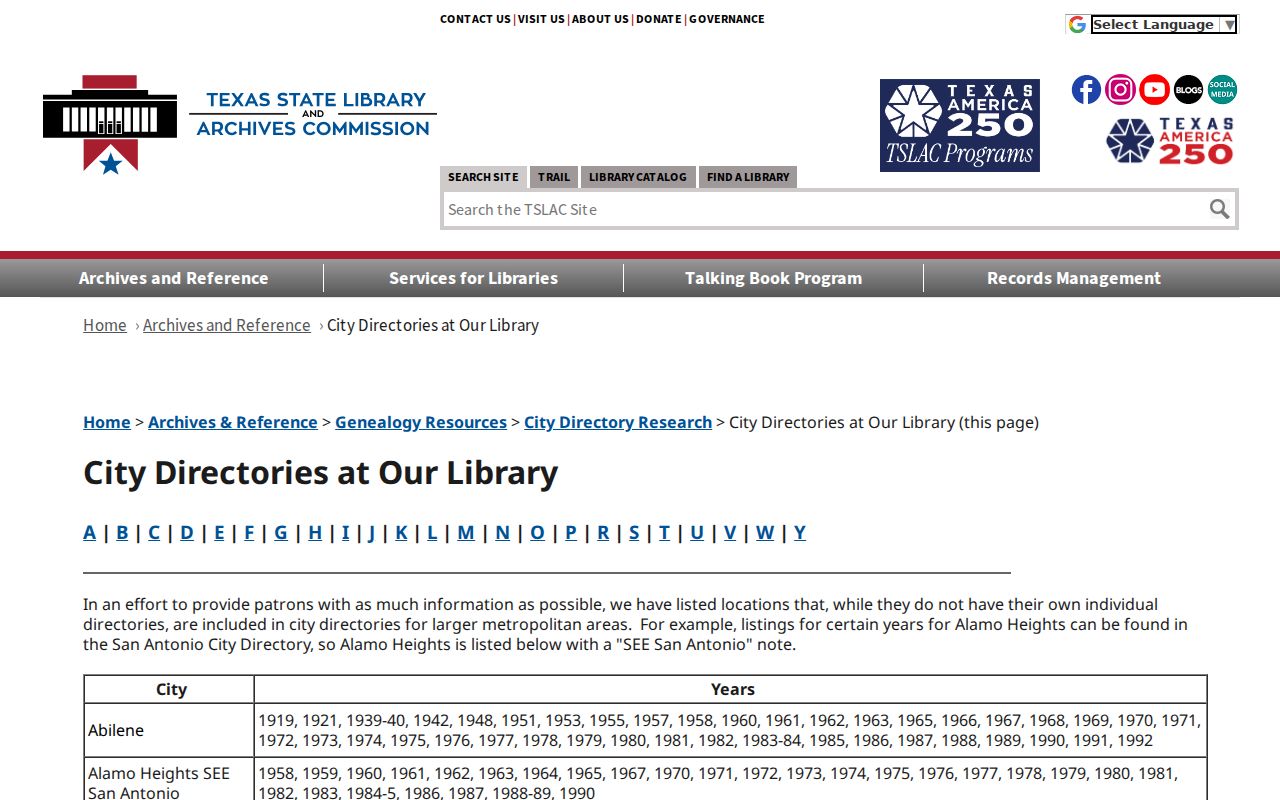
The list is most useful as a date-and-format locator. It still leaves the researcher to confirm Lancaster inclusion, address coverage, and the abbreviation key in the chosen volume.
- 1875: the TSLAC Dallas listing begins, with both print and film indicators in parts of the run.
- 1919-1924: listed years include some gaps, a reminder to check year by year.
- 1950-1979: many annual Dallas runs appear in the list.
- 1991: the listed Dallas run reaches this point, not a verified end date for Lancaster coverage.
Lancaster's Directory Desk and Access
The Dallas library divides the relevant shelves between its 7th-floor Dallas History & Archives Division and its 8th-floor Genealogy & History collection. Materials in History & Archives do not circulate, so the reading room is the primary path for a volume, map, newspaper, or county microfilm group. The genealogy floor adds a microform finding aid, more than 3,000 donated surname files, family Bibles, HeritageQuest, and FamilySearch Affiliate access on library computers. Those tools can help test a name found in a Lancaster directory search without turning a partial entry into a conclusion.
Dallas History & Archives describes the reading-room collections that hold directories, newspapers, maps, and county records.
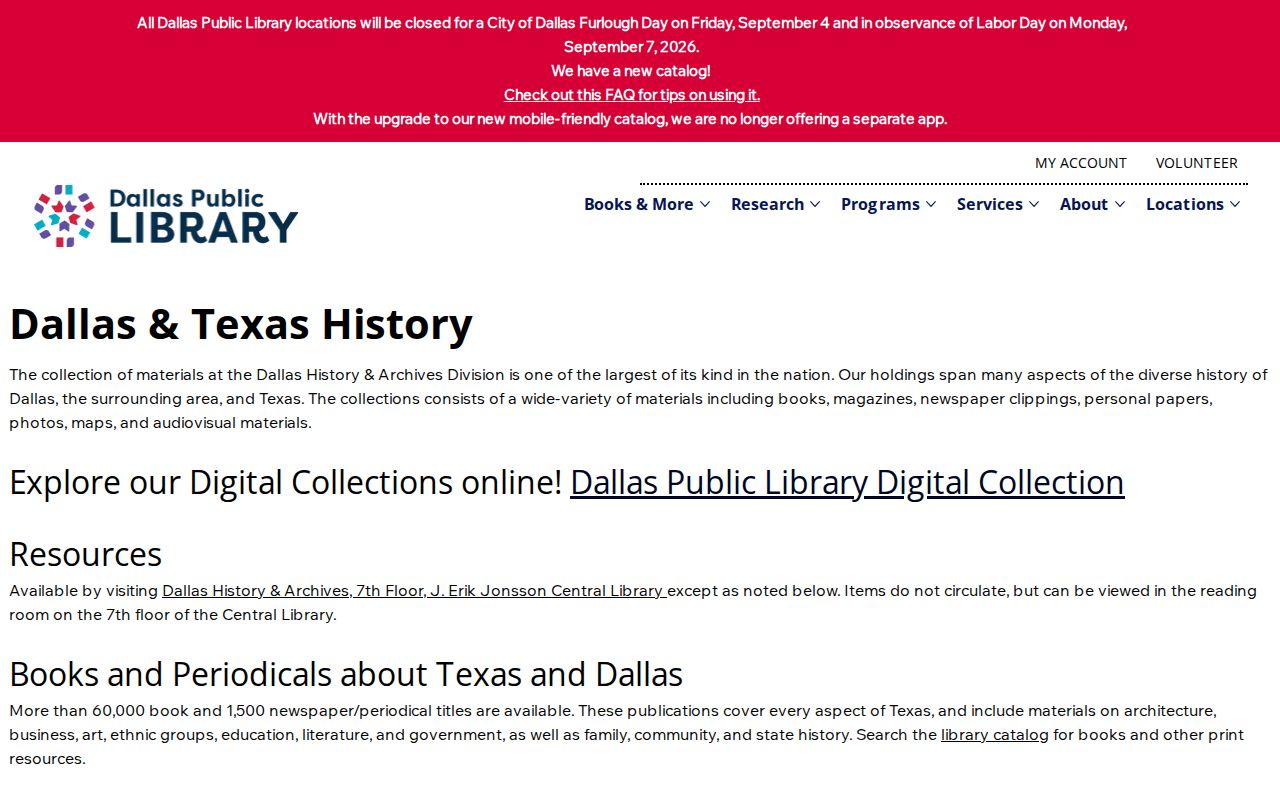
Use the image's source page as a collection starting point, then ask for a precise volume or reel. DPL also links digitized Dallas material through the Dallas Public Library digital collections, while selected directories may also appear through the Portal to Texas History, Library of Congress, or UT Austin collections.
Reading a Lancaster Directory Entry
No crawlable Lancaster-specific page was located, so the fields below are a format inventory drawn from TSLAC's directory guidance and DPL's collection description, not a transcription of a Lancaster entry. Read the page around a name. Initials, a spouse notation, an address, a business line, and a printed abbreviation can each distinguish two people with the same surname. The key at the front or back of the exact volume controls the meaning of its marks.
| Name | Surname followed by given name or initials, usually in alphabetical order. |
|---|---|
| Address | Street number and street name, sometimes an apartment or room number. |
| Telephone | Often present in later city or telephone volumes. |
| Spouse or trade | A spouse notation, occupation, employer, or business classification may appear. |
| Tenure or widow notation | Some volumes mark owner or renter status; “wid” or a similar abbreviation can appear, subject to that volume's key. |
- Criss-cross directory
- The address-first portion of a later directory. It can lead from a street number to an occupant or business.
- Householder index
- An index organized around the named household contact, not necessarily every person at the address.
- Abbreviation key
- The printed guide that explains the volume's short forms. Read it before expanding “wid,” tenure marks, or business abbreviations.
Lancaster Directory Myth: Dallas Means Lancaster
A Dallas run can be a strong lead for Lancaster, but it is not automatically a Lancaster roll. DPL says its urban Texas directories include city, telephone, and criss-cross material; TSLAC lists Dallas dates and formats. Neither source promises that every volume indexes Lancaster separately. A missing name may reflect coverage, compilation timing, spelling, an unlisted household member, or a different address, rather than a firm conclusion about where a person lived.
Compare the alphabetical page with the reverse section when one exists. Then use a nearby year, a census schedule, a deed, a plat, or a newspaper notice to resolve the gap. Note: A directory is often annual, but it may have been compiled months before printing and is not a household census.
Lancaster Criss-Cross Directory Pages
Reverse or criss-cross pages reverse the normal name-first logic. Search a street address first, then record the occupant or business shown at that point and the adjacent address numbers. This is useful when a family name is uncertain or when a deed supplies a lot but a historical street label needs confirming. Exact Lancaster reverse-directory years were not located, so use DPL or TSLAC staff to identify whether the relevant Dallas-area volume contains a workable section.
A criss-cross hit is an occupancy lead, not a claim that the person owned the parcel or that every household member is named. For current address-keyed records, use the Lancaster street directory route to separate the modern parcel record from the historical directory trail.
Lancaster Directories and Census Years
Pair each located directory with the nearest public federal census. Federal schedules are public through 1950 under the National Archives 72-year rule, while 1960 and later schedules remain restricted at the time of this research. The census can add ages, relationships, birthplace, and address geography; the directory can narrow the annual movement between census dates. Neither source perfectly matches the other because census day, publication date, boundary changes, and omissions all affect the result.
- Copy the directory's spelling, initials, spouse notation, street address, and any occupation or business details.
- Check an earlier and later directory volume for a move, a changed phone listing, or a new widow notation.
- Match the nearest census year, allowing for its enumeration date and the possibility that children or boarders appear only there.
- Use a deed, plat, or map when a current street number does not fit an older lot or block description.
- Close a disappearing trail with newspapers, obituary notices, or probate material rather than guessing why the name vanished.
The DPL Genealogy & History collection offers census and local-history tools alongside surname files. It is a practical alternate channel when the paper directory and the census do not agree.
Lancaster Maps Behind a Directory Address
Old addresses often need a physical-context check. DPL holds about 5,000 maps, including Sanborn fire-insurance and property-ownership maps, plus Murphy & Bolanz Block and Addition Books for Dallas County from 1880 to 1920. A Sanborn sheet can show a building footprint, use, lot, and street setting. It does not list a complete household. Pair a map year with the nearest directory and census year before attaching a name to that structure.
TSLAC's Dallas County microfilm guide is the source for reel-level historical-record context and documented gaps.
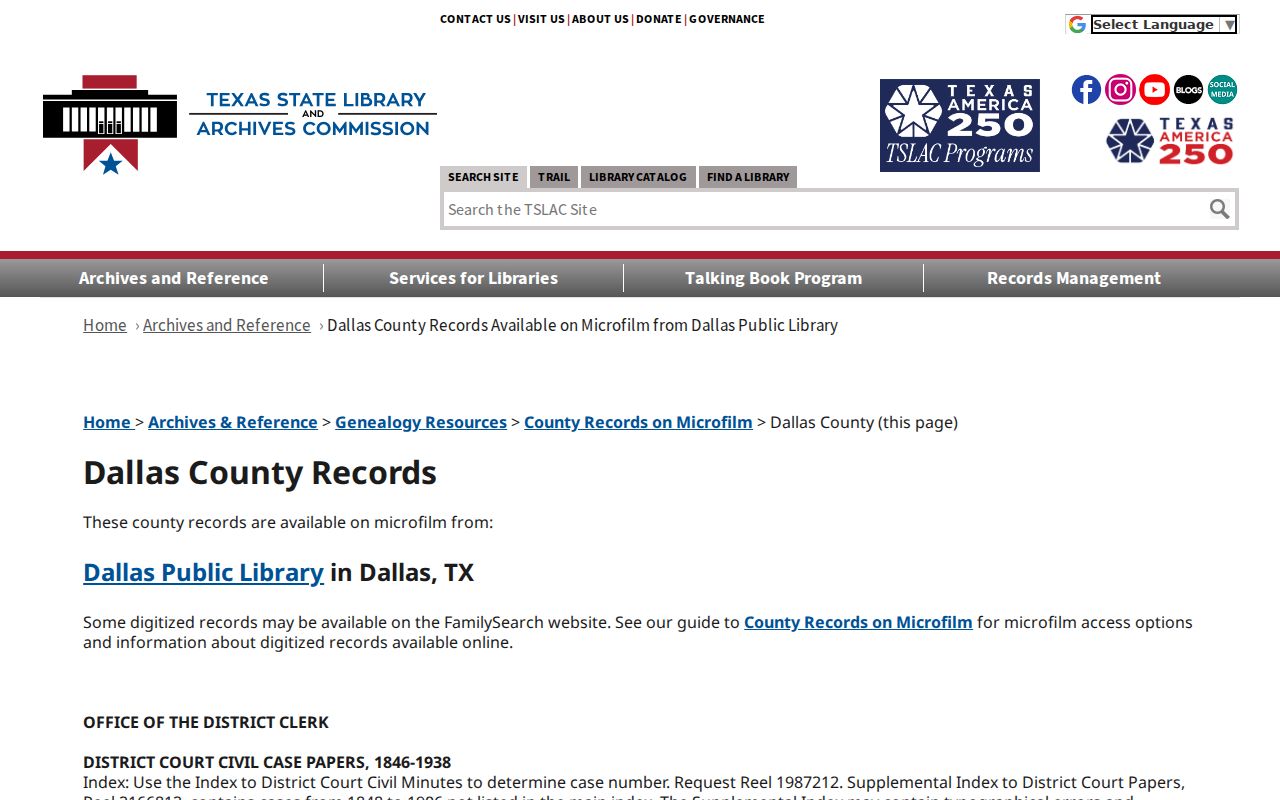
The guide helps identify records that survive on microfilm, including older court material and reverse indexes. When a directory address conflicts with a modern parcel, compare the lot, block, plat, or legal description rather than assuming the street number stayed constant.
Lancaster Directory Leads from 1977
The Lancaster Genealogical Society began in 1977 after 17 people met at the Lancaster Veterans Memorial Library. Its Portal to Texas History partner page reports 754 items, three collections, and one title in its summary. That is a catalog summary, not a complete Lancaster archive or a directory-year list. Search the live portal by title, creator, and date, then compare any local item with the broader Dallas directory shelf.
The Lancaster Genealogical Society partner page is the source view for the digitized local holdings summary.
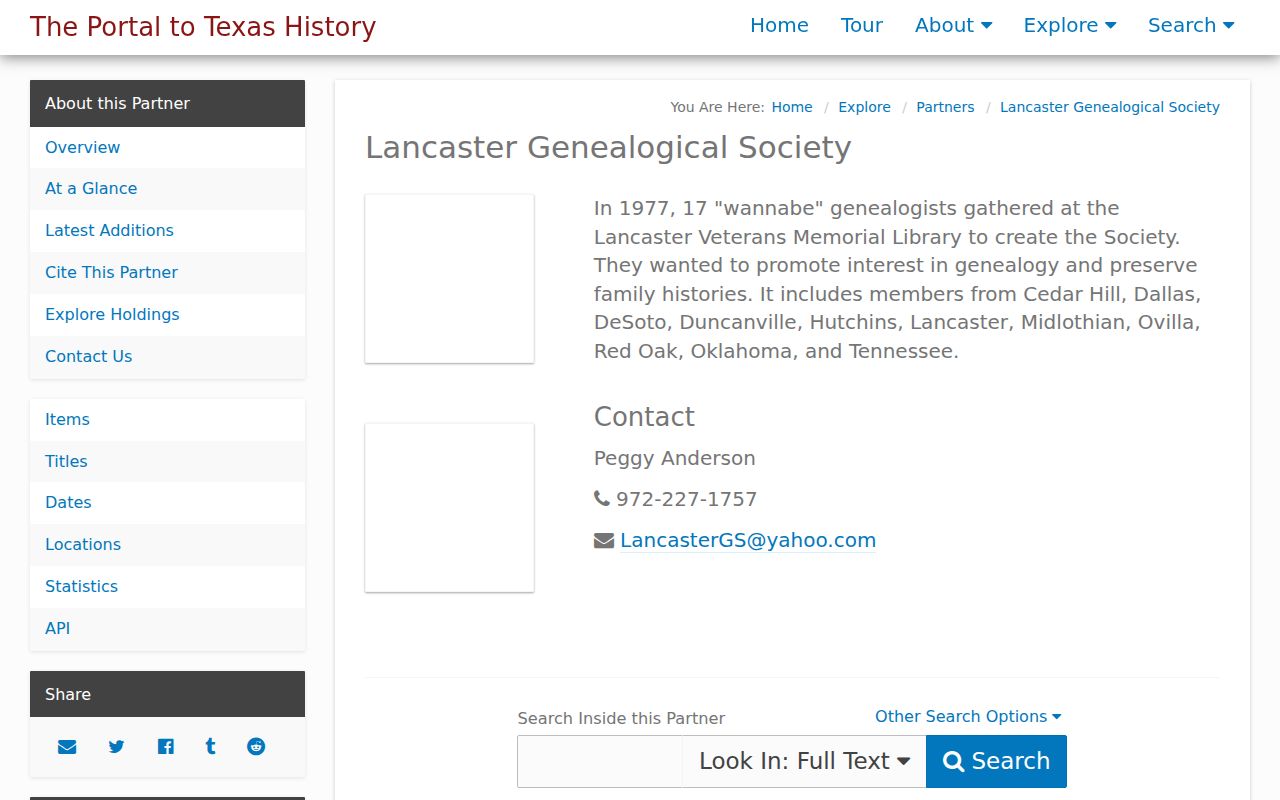
The portal adds a local lead alongside DPL and TSLAC, but it does not replace reading the specific directory volume. The Lancaster Veterans Memorial Library can provide reference help and route an inquiry to the appropriate regional collection.