
Lancaster Resident Lookup Records
No single Lancaster source establishes every fact about a person. Lancaster’s Dallas Central Appraisal District, or DCAD, can connect a recorded owner to a parcel and a tax mailing address. Lancaster’s Dallas County court routes can show whether a named party appears in a case. Lancaster voter and vital sources have narrower purposes and privacy rules. A Lancaster record from one system should be treated as a lead until a second, independent record agrees on meaningful details such as a name variant, address, date, relative, case number, or legal description.
| Record | What It Can Confirm | Custodian | Access Route |
|---|---|---|---|
| Lancaster DCAD appraisal account | Current parcel owner, situs, tax mailing address, legal description | Dallas Central Appraisal District | Owner, address, account, business, or map search |
| Lancaster recorded-deed trail | Grantor, grantee, instrument number, recording placement, land interest | Dallas County Clerk | Official Records Search; copy route may have a charge |
| Lancaster voter registration | Status, election jurisdiction, and address when public | Texas and Dallas County elections offices | Individual lookup or a statutory list request |
| Lancaster court docket | Party role, case number, filing or hearing, and disposition where shown | Dallas County or Lancaster court custodian | Portal, clerk counter, email, phone, or mail |
| Lancaster marriage or divorce index | Named parties, event placement, and index file number | Texas DSHS | Public index with separate verification and copy rules |
| Lancaster probate file | Estate, heirship, personal representative, and property filings | Dallas County Probate Courts | County route, clerk, or historical retrieval |
For a Lancaster parcel, start with DCAD only when ownership is the question. Use the Lancaster court route for a known case, the voter route for registration status, and the state index for a marriage or divorce cross-check. A Lancaster resident lookup does not turn a deed, tax address, or case caption into proof of present occupancy.
Verifying a Lancaster Resident
Use a two-source test before treating a Lancaster name hit as the right person. Normalize the surname, given name, middle initial, suffix, maiden name, and common alternate spellings used in Lancaster records. Then pair the name with at least two anchors, such as a Lancaster address, approximate age, spouse or relative, court county, organization, or recorded land description. A same-name Lancaster result in DCAD, a voter record, or a docket alone can belong to someone else.
- Search DCAD by the best known Lancaster address or owner name. Keep the account number, situs, mailing address, and legal description, while remembering that the mailing field is a tax-contact clue.
- Check the official Texas voter path for a Lancaster individual’s registration status and polling-place route. Protected addresses and identity fields are not a reason to guess around the result.
- Run the Dallas County court search for the Lancaster name with surname-first and name variants. Compare party role, court, case number, and dates against the anchors already collected.
- Use a Lancaster marriage, divorce, probate, or deed record only when its names and dates support the same identity. Request a certified record from the custodian when an official certified copy is actually needed.
The Lancaster verification trail works in either direction. A Lancaster name can lead to a parcel, then a deed, then a probate or court case. An old Lancaster address can lead to an account and legal description, then to recorded parties. Keep each source’s claim separate. A deed proves a recorded interest, while an appraisal card summarizes a tax record.
- Docket
- A court’s running list of case events, hearings, orders, and status. It is not itself a finding that every allegation is true.
- Index and image
- An index is the searchable finding aid. An image is the underlying filed or recorded document, which can have different availability or copy rules.
- Certified copy
- A copy issued and authenticated by the record custodian. It carries more formal weight than a search result or an unofficial printout.
Lancaster Court Record Checks
Lancaster uses Dallas County’s separate court paths by record type. Its online record-search directory routes civil district, family district, county and probate, felony, and misdemeanor matters. The public Dallas County and District Court Case Information and Documents route allows public access without registration according to the county page. Lancaster Municipal Court is a separate Lancaster contact for Class C and city-ordinance matters, and its public page does not provide a general name-search form.
For a Lancaster name, Odyssey Smart Search accepts a record number or a name formatted Last, First Middle. Its tutorial also describes advanced search options, a Sounds Like checkbox, hearing location and type controls, and date-range fields. Those controls are useful when a common Lancaster surname produces too many results. Family, juvenile, sealed, expunged, sensitive, and protected mental-health material can be limited or unavailable. A docket is not a current-address record and a party name must still be compared with other Lancaster anchors.
Dallas County’s court-search directory is shown in this captured screen.
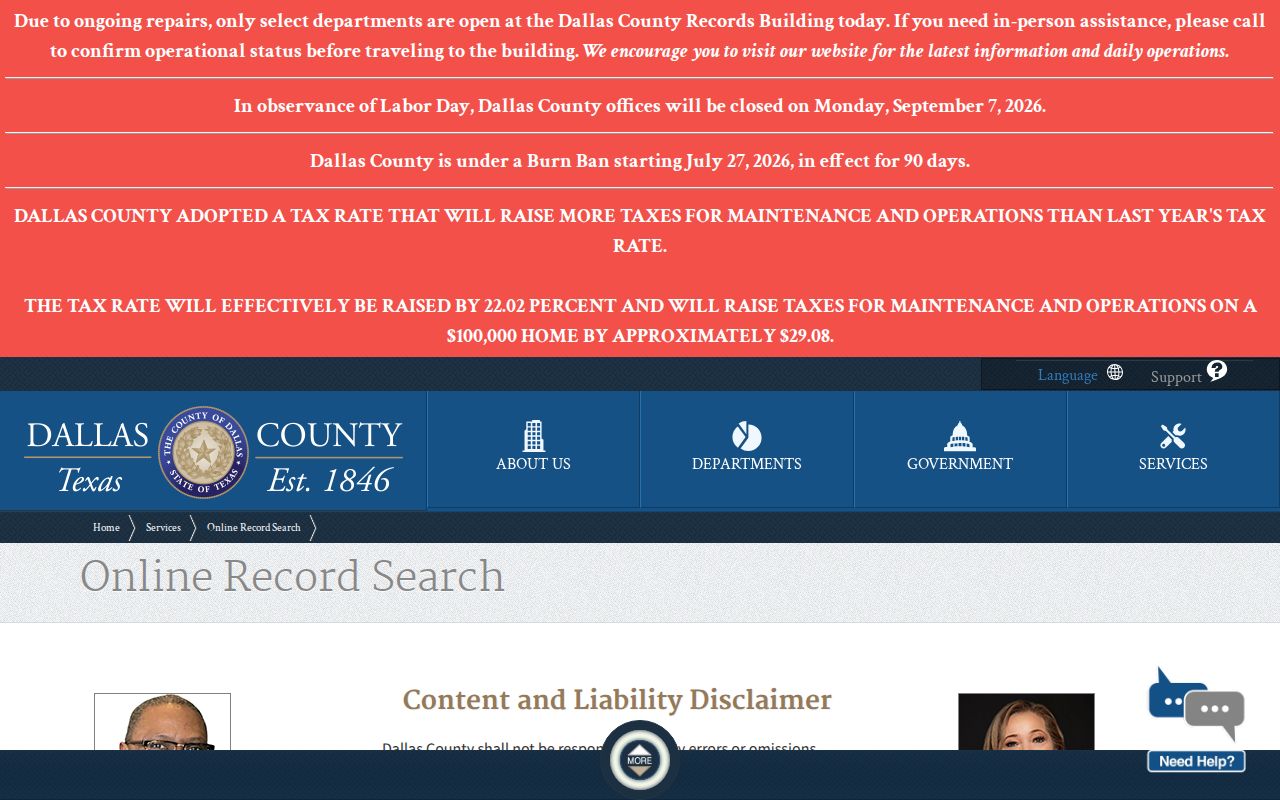
The directory makes the record-type split visible, which helps keep a county case search distinct from an inquiry to Lancaster Municipal Court.
A docket result can show a case number, party name and role, court or division, case type, filing date, hearing details, events, and disposition where available. Most civil files after 2008 are online, according to the District Clerk, but document access changes by record type. The District Clerk Civil and Family Records Desk accepts in-person, email, and mail requests. County Clerk Central Records also has counter and mail paths, and older misdemeanor material can require off-site retrieval. Check the county’s current service notice before traveling because 2026 facility changes affected access routes.
Lancaster Voter Record Limits
The Dallas County voter lookup and VoteTexas route are for a person’s registration and polling information, not a list of everyone at an address. Texas materials describe name, date of birth, and a driver-license or DPS PIN path for the individual tool, although the inspected county form did not fully render. A result can support a registration question, but it does not prove that every person at a property is a current resident.
The Dallas County registration lookup is the source captured for the Lancaster resident lookup.
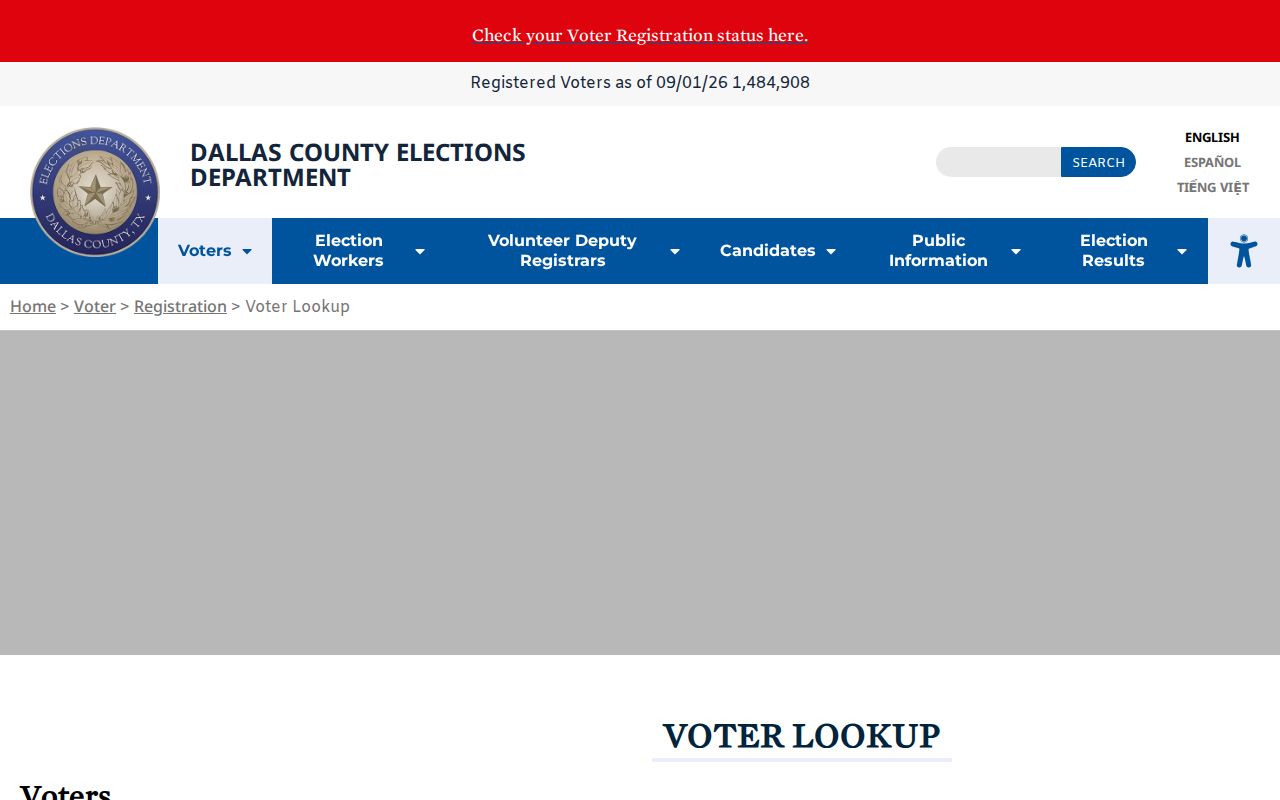
The capture supports the county route while the research notes that the live page returned a limited rendering during inspection.
Myth: voter information is not a complete personal profile. Texas protects Social Security numbers, driver-license and DPS identification numbers, phone numbers, and confidential addresses. Address Confidentiality Program participants and other protected voters may have a substitute or withheld address. A statewide computerized list request is a distinct process under Election Code section 18.066, requires the prescribed affidavit, and has use, fee, delivery, and privacy boundaries. Use an individual result for the narrow registration question instead of inferring a household.
Note: An active, suspense, or cancelled voter status is time-specific registration information, not a guarantee that the person is currently present at a Lancaster address.
Lancaster Vital Record Years
Texas DSHS keeps a marriage index from 1966 forward and a divorce or annulment index from 1968 forward. The yearly index files can include both names, ages, event date, place, and file number. They are helpful cross-checks when a name, spouse, or date already points to the right person. DSHS cautions that its indexes are aids rather than legal documents and can be incomplete or misspelled. For earlier events, use the Dallas County Clerk or District Clerk that holds the underlying local record.
Birth and death records have different access limits. Under Texas Government Code section 552.115, a birth record becomes public after 75 years and a death record after 25 years, with a one-year rule for an unidentified decedent death record. Recent protected certificates are limited to a qualified person or immediate family under the documented rules. A marriage verification is not a certified license, and a divorce verification is not a decree. Certified marriage licenses come from the county clerk where issued; certified divorce decrees come from the district clerk where granted.
Texas DSHS Vital Applications and Forms lists the state request forms used for vital-record access.
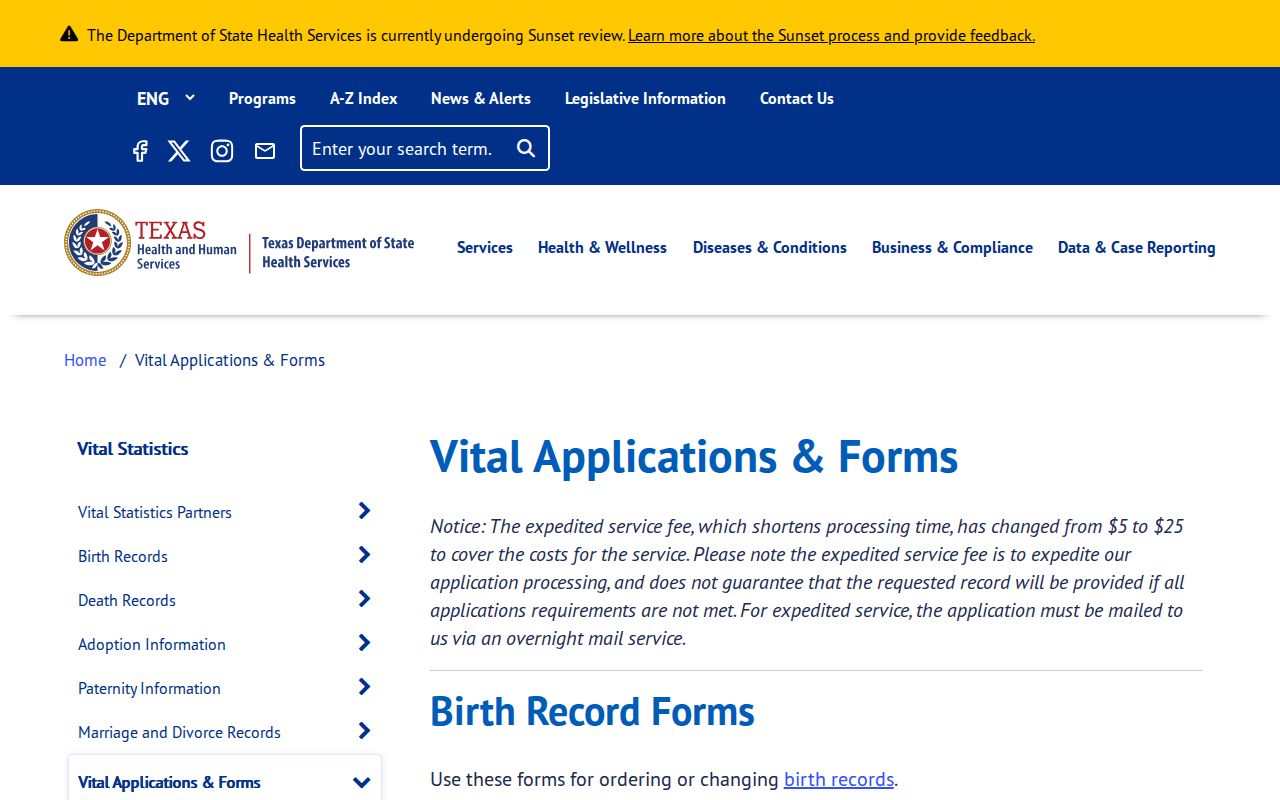
The form hub separates birth, death, and marriage or divorce request routes, so an index lead is not mistaken for a copy application.
Dallas County is the local registrar for Lancaster events and maintains birth, death, and marriage records for the county cities it serves. Its vital-record counter is at 500 Elm Street, Suite 2100, and the county lists 214-653-7099 for the office. State forms also document online, mail, and in-person channels. Use the form that matches the precise record, eligibility, and copy type rather than asking a clerk to identify a person generally.
Lancaster Lookup Access Tips
DCAD says the account number is its best search key, although a correct address or owner name often works. That is useful when an initial Lancaster resident lookup finds a property but needs a stable identifier for the next step. From the account card, keep the property location, account number, and legal description. The owner mailing address can help distinguish records, but it can be an office, post-office box, or another address and is not proof of where the owner lives.
When the online result is too thin, ask the correct custodian for an existing, specific record. The Texas Public Information Act requires a written request to the governmental body that holds the records. Identify the case number, instrument number, exact year, property address, or document type. The Dallas County Clerk’s document-request form asks for the recorded name, grantor or grantee, instrument number, document type, or property address, and it directs requesters to use a prepaid return envelope. Its stated copy choices are plain or certified, and personal checks are not accepted on that form.
Note: Dallas County reported temporary Central Records service changes in 2026, so confirm the current counter, phone, and email route before a visit or mailed follow-up.
Lancaster Library Name Trails
For a former classmate, family-history question, or an old address, Lancaster Veterans Memorial Library can provide public computers, reference help, scanning, printing, and genealogy-program referrals. Its published information does not promise a current resident file. The useful follow-up is often Dallas Public Library’s Dallas History and Archives or its Bockstruck Genealogy Collection, where directories, newspapers, yearbooks, surname files, maps, and related materials can supply historical leads.
The Lancaster Genealogical Society began at the library in 1977 and its Portal to Texas History partner summary reports digitized local material. Those collections can connect a directory name to relatives, yearbooks, or a memorial notice, but they do not establish a current address. For an estate question, Dallas County Probate Courts retain wills, estates, guardianships, and heirship material permanently, subject to restricted-file rules. Follow historical leads back to a county or state custodian when a formal record is needed.
Lancaster Resident Lookup Limits
Texas privacy protections can hide a legitimate record without making it appropriate to work around the limit. The Texas Address Confidentiality Program gives qualifying survivors a substitute mailing address. Protected voter fields, sealed court files, redacted images, adoption records, utility accounts, delivery records, DMV data, and school information are not ordinary inputs for a Lancaster resident lookup. Record a protected or unavailable result, then stop rather than trying to reconstruct a private address through relatives, neighbors, or an earlier record.
Corrections also belong with the custodian. DCAD accepts written property-record requests, voter updates go to the registrar, recorded-instrument errors follow the county clerk’s correction or re-recording process, and court or vital corrections require the respective clerk or DSHS procedure. Save the source date and request number. That preserves a clean trail without repeating unnecessary personal details.
Lawful use. Use Lancaster records for a specific, personal, lawful purpose. Public information never permits stalking, harassment, intimidation, or an attempt to expose a protected person.