
Lancaster Previous Residents by Record Era
A backward address trail needs an era plan. Current appraisal information supplies the parcel identity and a starting owner. Dallas County recorded instruments establish the land-interest chain. Directories, census schedules, and newspapers add household evidence, while maps help translate an old lot or block into a recognizable street context. The table separates those functions so an owner, an occupant, and a building are not mistaken for the same kind of evidence.
| Source | Years It Covers | Where Held | What It Shows |
|---|---|---|---|
| Dallas County deed and index books | 1846-1963 historical index; county says online real estate reaches 1846-current | QuickLink, Official Records Search, Clerk counter | Grantor, grantee, instruments, and land-interest chain |
| DCAD appraisal and GIS | Current account; certified historic parcel products listed for 2022-2025 | DCAD account and map tools | Situs, owner, mailing address, parcel, and legal description |
| Dallas city and county directories | 1875-1991 Dallas runs, with gaps and format variations | DPL and TSLAC | Annual address-to-occupant or business clue |
| Reverse or criss-cross material | Exact Lancaster run not located | DPL 7th-floor Archives | Street or address to an occupant or business |
| Federal census | 1850-1950 public under the 72-year rule | NARA, FamilySearch, HeritageQuest, and DPL | Household members, relationships, and address geography |
| Sanborn and property maps | Texas collection, 1877-1922; Lancaster sheet list not fully inventoried | DPL, UT PCL, and Library of Congress | Building footprint, use, lot, and street context |
| Permit, code, obituary, and probate trails | Coverage varies; probate has permanent retention | Lancaster offices, DPL, and Dallas Probate | Changes to a structure, death, heirs, or estate property |
Start with DCAD and the current Official Records path for a recent transfer. When the trail reaches a gap or an older address form, shift to the historical index, a Clerk copy request, a reading-room reel, or a map collection. The Lancaster permit portal is for registered contractors, and no complete public historic permit index was located. That gap is a reason to make a focused city request, not a reason to assume permit history is absent.
Four Keys for Earlier Lancaster Residents
The cleanest unit is not the street number by itself. Keep four identifiers together: the Dallas Central Appraisal District account number, the present situs address, the subdivision lot and block or abstract, and the latest County Clerk instrument number. Street numbers can be reused, abbreviated, or absent from old indexes. The legal description, plat details, and instrument placement provide a stronger continuity check across a changed address or a broad Lancaster label.
Use DCAD's search by address, owner, account, business name, or map. Its account card distinguishes the physical property location from the owner mailing address. A mailing address is where tax notices go, and it may be an office, post office, or another home. It can be a clue, but it is not evidence that the owner occupied the Lancaster property.
Record the current account, legal description, subdivision, and any instrument number before moving to a deed. This small record set prevents a same-number mistake when an older document uses a lot, block, metes-and-bounds description, or a former street form.
Lancaster's 1846-1963 Deed Bridge
The Dallas County historical QuickLink index makes Deed Record Index Books for 1846 through 1963 searchable, viewable, and purchasable. The newer Official Records Search offers Quick and Advanced searching, recorded-date controls, and index-only or index-and-full-text modes. Dallas County says real-estate records have been digitized from 1846 to current, but the current public interface does not state one exact online cutoff. Use both paths as complements, then verify an image or certified instrument with the Clerk.
The historical deed-index interface is the source for the 1846-1963 index-book route.
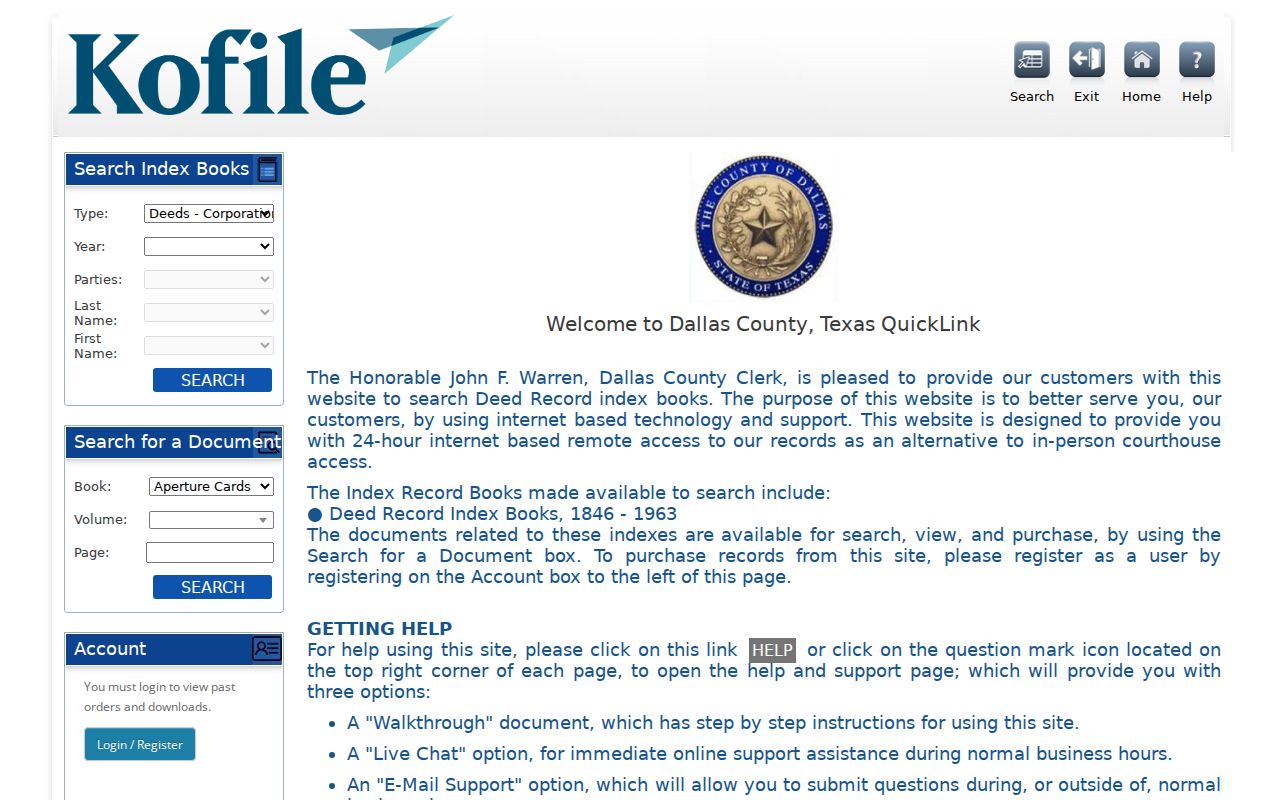
An index hit is a finding aid, not the whole deed. Note the grantor or grantee spelling, instrument or book reference, recorded date, and legal description before treating the result as part of the Lancaster address trail.
Trace Lancaster Previous Residents Through Dallas Deeds
Begin the deed chain with the current DCAD account and the latest instrument reference. Search the instrument number first in the County Clerk records, then search the current owner as grantee and the seller as grantor. The latest purchase deed may identify the parties, recording date, consideration when stated, legal description, and an earlier instrument reference. Read the image or obtain the record copy because an index result may not expose every useful field.
Dallas County Official Records Search is the current public entry point for a document-number, name, subdivision, document-type, or legal-description search.
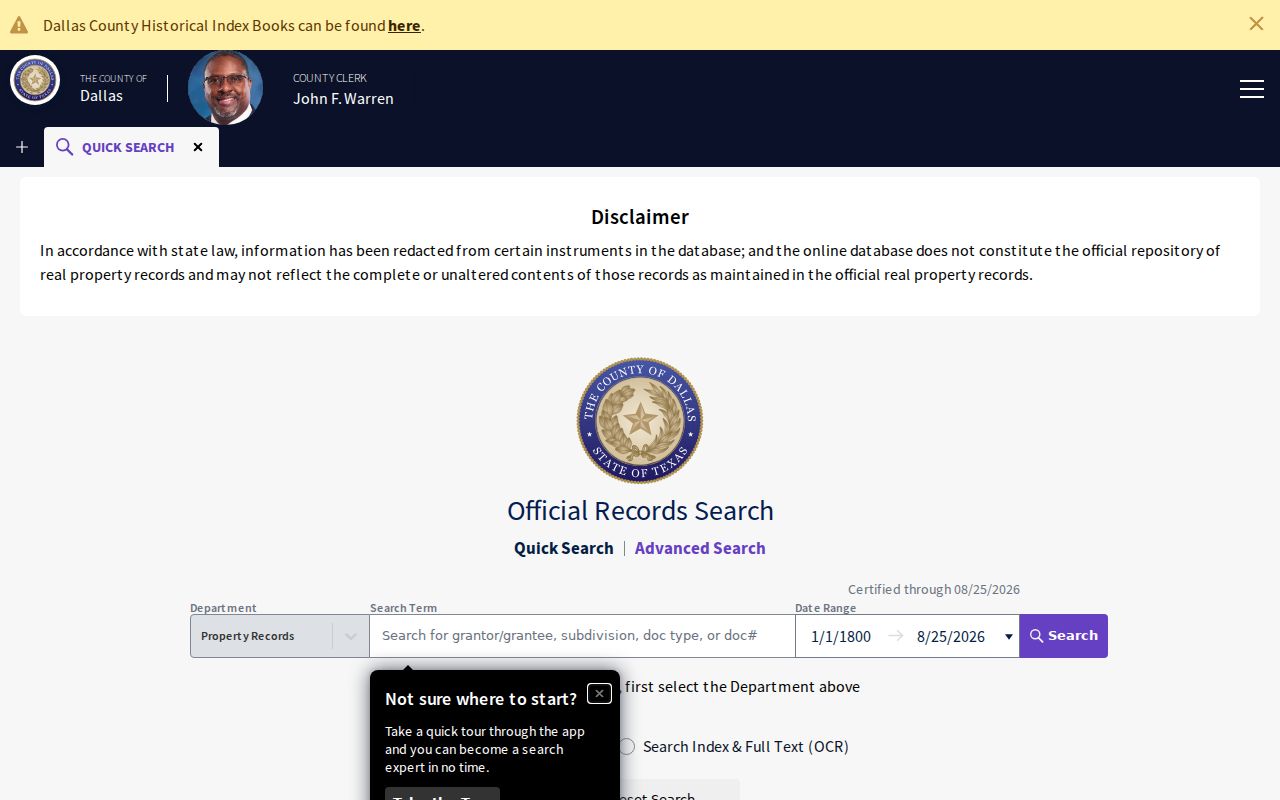
The search screen supports discovery. The actual chain comes from reviewing each recorded document and checking that its legal description matches the same Lancaster parcel.
- Copy the account number, site address, lot or block, abstract if present, and instrument number from DCAD.
- Open the latest conveyance and identify the named grantee, grantor, recorded date, prior reference, and parcel description.
- Search the seller as a prior grantee, then repeat one transfer at a time using name-order and spelling variants.
- Include correction deeds, releases, deeds of trust, probate conveyances, and substitute-trustee instruments instead of presuming every transfer was a sale.
- When the web result stops, move to QuickLink, DPL or TSLAC microfilm, the Clerk counter, or a focused document request.
Lancaster Legal Descriptions Hold the Trail
Compare every deed's lot, block, subdivision, abstract, acreage, or metes-and-bounds wording against the DCAD account. A plat, adjacent street, or map position can resolve a changed address, but two documents should not be joined just because they share a street number. The legal description is the bridge from a present parcel to a historical deed, particularly around Lancaster's older townsite and later subdivisions.
- Grantor and grantee
- The grantor transfers an interest in land. The grantee receives that interest. In a backward chain, the recent seller is often searched as an earlier grantee.
- Chain of title
- The recorded sequence of transfers and related instruments affecting one parcel. It tracks land interests, not everyone who lived there.
- Legal description
- The lot, block, subdivision, abstract, or metes-and-bounds language that identifies the land more reliably than a changing street address.
- Instrument number
- The recorder's identifier for a filed document. It is usually the fastest bridge from a DCAD account reference to the county record.
Note: An appraisal homestead flag or a tax mailing address can support a narrow ownership clue, but neither field is a full roster of people at the property.
Lancaster Past Residents in Criss-Cross Pages
Once the land chain identifies the right parcel, switch from owners to occupants. Dallas-area city directories and reverse or criss-cross pages at DPL can take an address to a listed occupant or business. Exact Lancaster criss-cross years were not located, so ask for the relevant reel or volume rather than claiming a continuous local run. A reverse entry can reveal adjacent numbers and businesses that help distinguish a street segment from another address with a similar name.
Dallas History & Archives identifies the city, telephone, and criss-cross directories, newspapers, maps, and county records held in its reading-room collections.
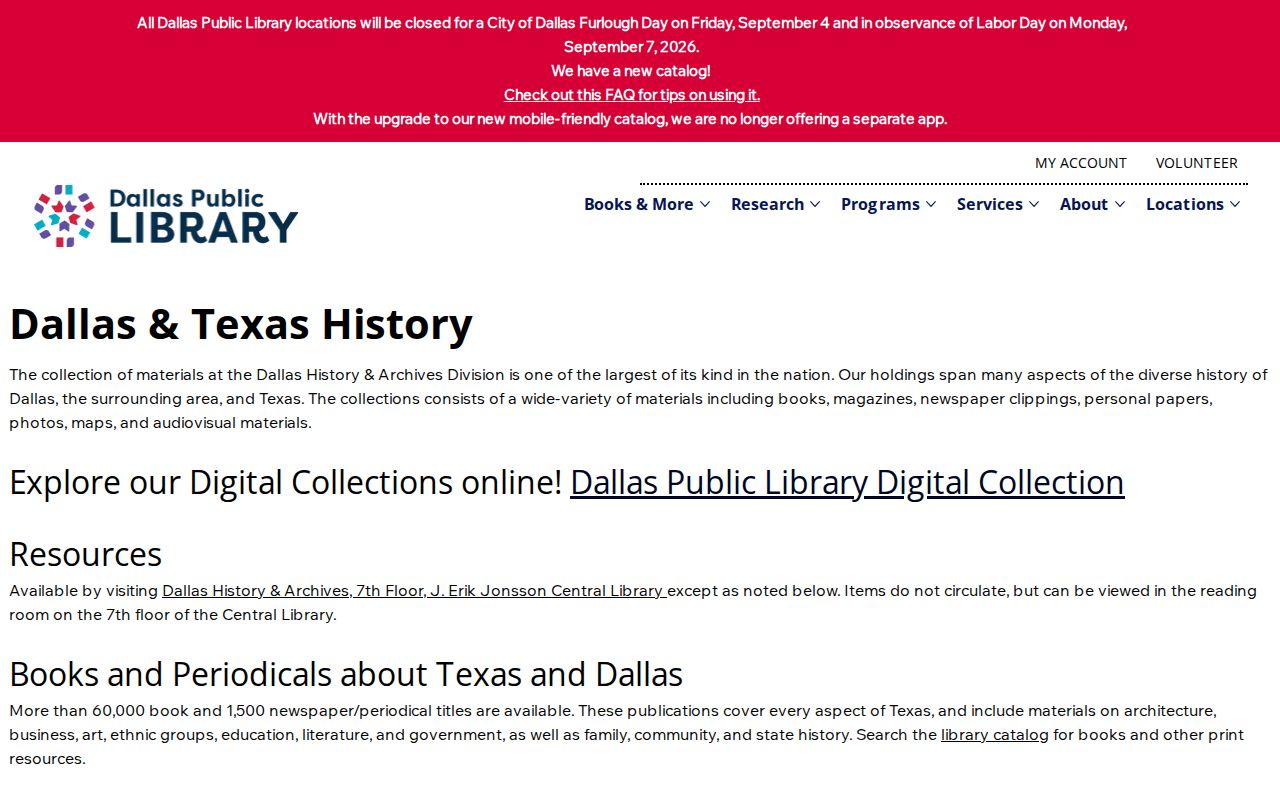
The library shelf is an occupancy lead, not a current resident list. The historical volumes themselves are described on the Lancaster city directory collections page; here, the useful step is matching a found address to the correct date in the deed chain.
Follow Lancaster Previous Residents Into Census Years
A deed can establish a recorded land interest, but it cannot establish a complete household. Pair a directory year with the nearest public census to test who was enumerated in the area. Census schedules are public through 1950 under the 72-year rule. They can identify household relationships, ages, birthplaces, and address geography, while a directory often supplies a more frequent address clue. Allow for the census date and the fact that a directory may omit children, boarders, or a person listed at a business address.
- Start with the surname, address, and year from a directory or criss-cross page.
- Check the nearest census schedule, retaining the enumeration date and the exact place description.
- Compare names, spouse details, ages, and address geography instead of joining entries on a surname alone.
- Repeat with the earlier or later directory volume to separate a move from a temporary omission.
- Use newspaper notices, obituaries, or probate filings to explain a household's last appearance when records permit access.
DPL's Genealogy & History floor offers library access to HeritageQuest and FamilySearch Affiliate resources, plus surname files and local newspaper tools. Those access channels can bridge a census or directory gap without overstating what a single record proves.
Map a Lancaster Address Before Naming Residents
Maps date the structure, not the household. DPL's collection includes Sanborn fire-insurance and property-ownership maps, as well as online Murphy & Bolanz Block and Addition Books for Dallas County from 1880 through 1920. A sheet may show a dwelling, storefront, outbuilding, use, lot, and street context. Compare a map year to the closest directory and census, then use the deed's legal description to test that the mapped lot is the same property.
TSLAC's Dallas County microfilm guide documents reel-level records, reverse indexes, and gaps that matter when an address trail moves beyond the online interface.
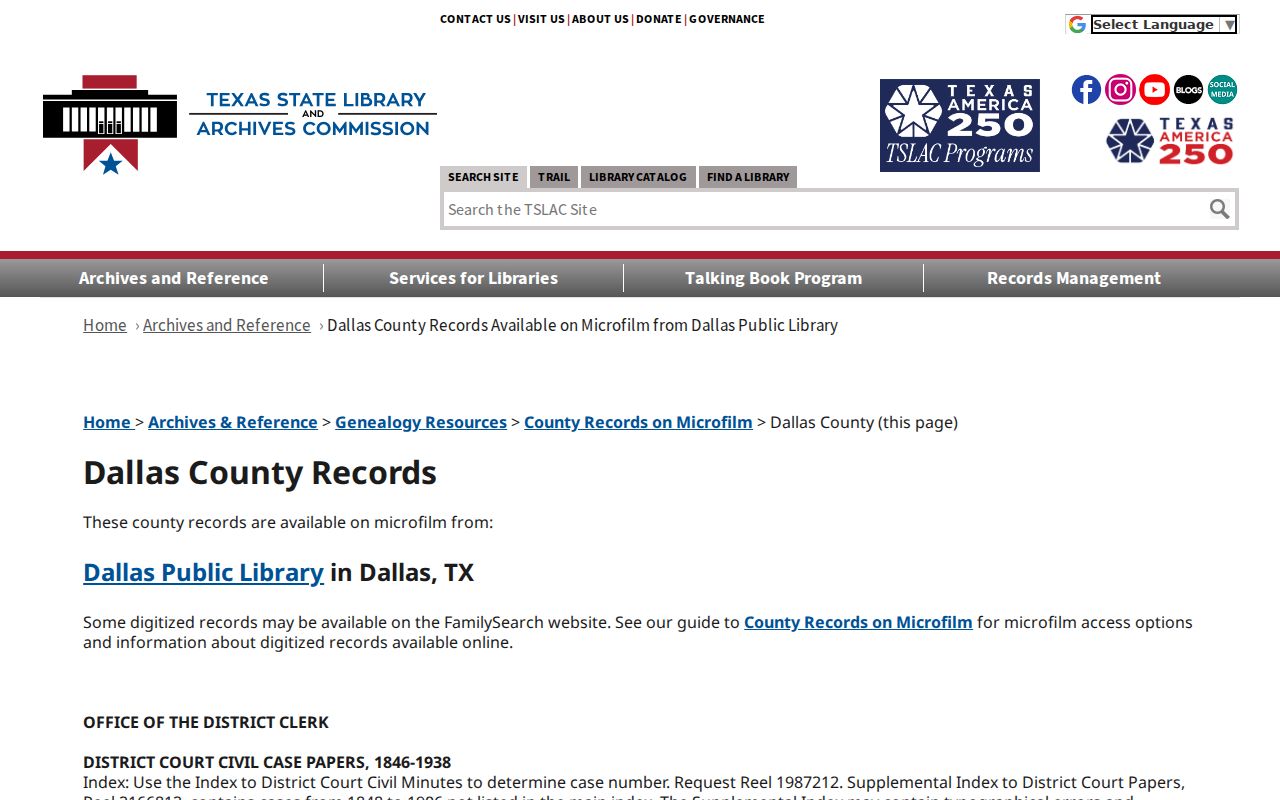
The source guide helps locate surviving historical material. It also supports a needed caution: early courthouse losses, missing microfilm volumes, and transposed dates in supplemental indexes mean an apparent no-result can require a second route.
Lancaster Previous Residents at a Probate End
When an address trail ends, look for a dated endpoint rather than assuming a move or death. DPL newspapers can supply obituary notices, marriage announcements, probate notices, and local news. The Dallas Genealogical Society has a Universal Search spanning more than 67,000 records in nine collections, including local cemetery, funeral-home, early court, land, marriage, probate, and tax material. Dallas County's probate courts retain wills, estates, and guardianship records permanently, subject to ordinary access limits and sealed-file restrictions.
Search a full name alongside a spouse, address, church, funeral home, or heir, then compare the probate application, letters, will, or later property transfer to the deed chain. A newspaper item is an historical lead. Obtain an official vital or probate record from its custodian when access rules allow. No Lancaster-specific public cemetery index or complete funeral-home archive was located in the researched official sources.
Lancaster Myth: A Deed Is Not a Household Roll
A recorded instrument may give names, roles, addresses, consideration, legal description, and filing placement. It does not identify every person who lived at the premises. The same is true of a tax mailing address, a homestead flag, a permit applicant, and a code notice. Each record has a narrower purpose. Label an owner, an occupant, a contractor, and an heir separately when reviewing a Lancaster address history.
Lancaster Records Tip: Focus the Mail Request
When a needed image is not available online, the Dallas County Clerk Request for Documents form asks for a recorded name, grantor or grantee designation, instrument number, document type, property address, city, state, and ZIP. The form lists plain copies at $1.00 per page per document and certified copies at $1.00 per page plus $5.00 to certify each document. It directs requesters to search the Official Records portal first.
Use a specific instrument number or a defined address and year range. The form calls for a business check, cashier's check, or money order payable to the Dallas County Clerk, not a personal check, and asks for a properly sized prepaid self-addressed stamped envelope. Mail is one option alongside the Clerk counter, DCAD customer service, DPL or TSLAC research, and a focused Texas Public Information Act request when a government office holds an existing record outside the portal.